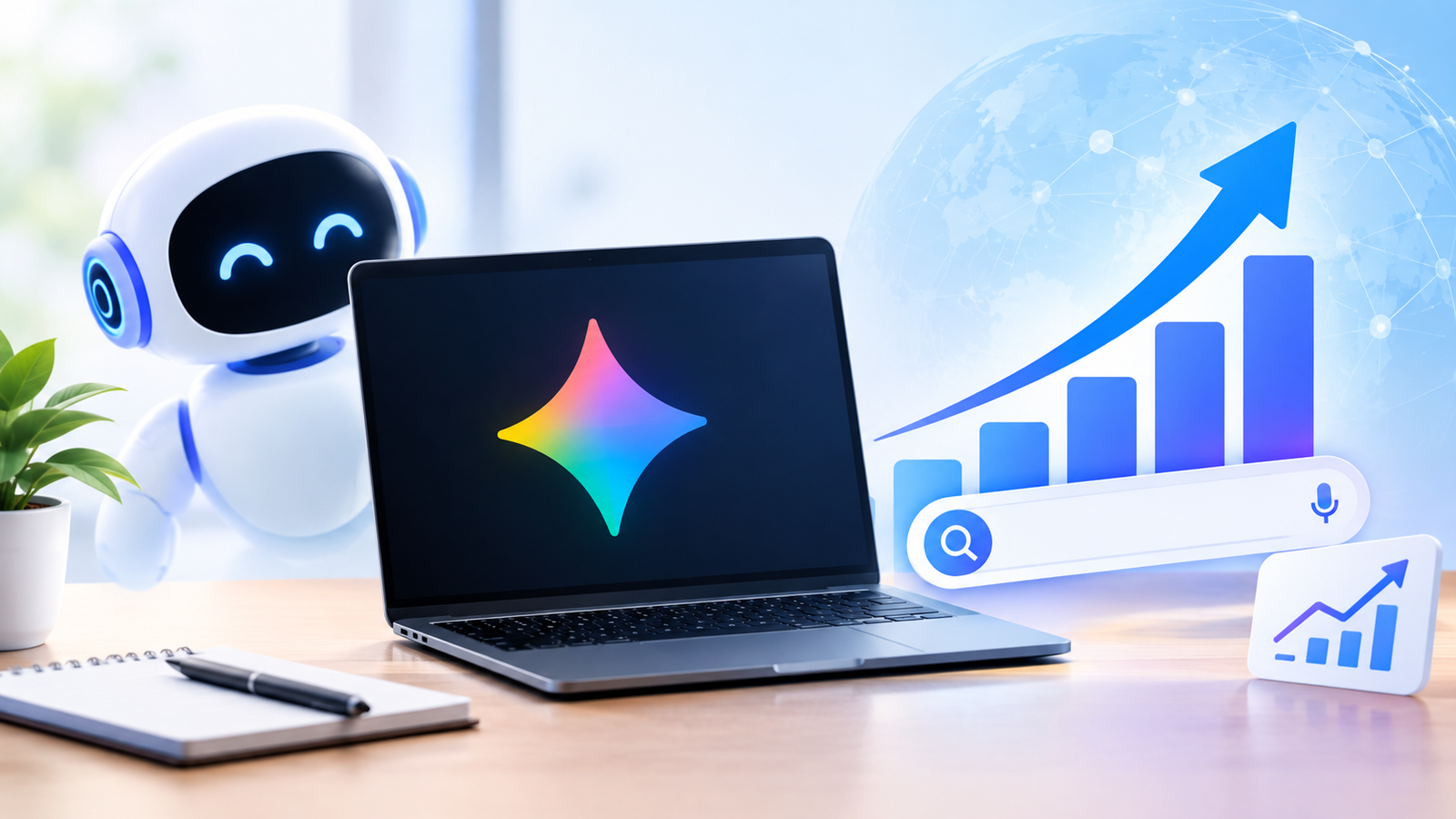

AEO (Answer Engine Optimization) is the practice of structuring and writing your website content so that AI-powered answer engines — like Google AI Overviews, ChatGPT, Perplexity, Gemini, and Microsoft Copilot — can easily read, understand, and quote your content directly in their answers.
In simple words: SEO gets your webpage listed in search results. AEO gets your actual sentence quoted inside an AI-generated answer — sometimes without the user ever clicking on your website.
If you’re a marketer, student, or business owner in 2026, understanding AEO isn’t optional anymore. More and more searches are happening inside AI chat tools instead of the classic Google search bar, and if your content isn’t “answer-ready,” you’re invisible in that conversation — even if you rank #1 on old-school Google.
Why AEO Matters Right Now
Search behavior has genuinely changed. People used to type a query, get 10 blue links, and click through. Now, a large and growing share of users ask a question directly inside ChatGPT, Google’s AI Mode, or Perplexity, and get one summarized answer — often with 2-4 sources cited underneath it.
That means:
- Your page can have great content, but if an AI tool can’t easily “lift” a clear answer from it, it won’t get cited.
- Users are increasingly forming an opinion about a brand, product, or concept before they visit any website — purely from the AI’s answer.
- Being cited inside an AI answer builds trust and authority even when the user doesn’t click through immediately.
For a digital marketing institute, this matters twice over — you need AEO for your own website, and your students need to understand it as a core 2026 skill, alongside SEO, PPC, and social media marketing.
AEO vs SEO: What’s the Real Difference?
People often confuse the two. Here’s the plain difference:
| Factor | SEO | AEO |
| Goal | Rank your webpage in search results | Get your content cited/quoted inside AI-generated answers |
| Where it shows up | Blue links, snippets, maps | AI Overviews, ChatGPT answers, Perplexity citations, voice assistants |
| What matters most | Keywords, backlinks, page speed, technical SEO | Clear direct answers, structured content, trust signals, original data |
| Success metric | Rankings, clicks, organic traffic | Citations, mentions, AI referral traffic, brand visibility in AI tools |
| Content style | Optimized for search intent | Optimized to be “answer-extractable” in one or two sentences |
Important point: AEO is not a replacement for SEO — it’s built on top of it. If your website has weak technical SEO (slow pages, poor structure, no crawlability), AI engines will struggle to find and trust your content in the first place. You can’t skip SEO and jump straight to AEO.
How Do Answer Engines Actually Pick What to Cite?
Most AI answer engines follow a similar pattern when generating a response:
- They interpret what the user is really asking (the intent).
- They pull relevant information from indexed web content.
- They check trust signals — is this source consistent, credible, and backed by other mentions online?
- They summarize the best-matching content into a direct answer.
- They pick 1-4 sources to cite or link.
This means vague, fluffy content (“we provide quality solutions for all your needs”) gets ignored. Specific, direct, well-structured content gets picked.
6 Practical Ways to Optimize Your Content for AEO
1. Answer the main question in the first 2-3 lines
Don’t bury your definition under a long story or introduction. If someone asks “what is AEO,” your very first paragraph should answer it clearly — exactly like we did at the top of this post. AI engines pull from the clearest, earliest answer on the page.
2. Use question-based headings
Structure your content around real questions people ask — “What is AEO,” “How is AEO different from SEO,” “How do I start with AEO” — instead of vague headings like “Overview” or “Introduction.” Question-style H2s and H3s match how people actually phrase prompts to AI tools.
3. Keep answers short, then expand
Give a 1-3 sentence direct answer first. Then add depth below it — examples, data, step-by-step detail. This “answer first, explain after” format is exactly what gets lifted into AI Overviews and chatbot responses.
4. Add schema markup
FAQ schema, Article schema, and HowTo schema help answer engines understand what your content is about at a structural level. It won’t fix weak content, but it reinforces strong content.
5. Add original insight, not generic filler
Case studies, real numbers, your own experience, and specific examples make your content worth citing. Ten paragraphs of generic advice that repeats what’s already on Google’s first page won’t earn a citation — AI tools have already seen that information a hundred times over.
6. Build your off-site reputation
AI tools cross-check what your site says against how you’re described elsewhere — reviews, forums, directories, social mentions. If your website claims one thing and the rest of the internet says something else, engines lose trust in your content.
Common AEO Mistakes to Avoid
- Treating AEO as “just add an FAQ section” — real AEO is about structure and clarity across your whole page, not one section.
- Adding schema markup to weak, generic content and expecting citations — schema can’t fix thin content.
- Ignoring basic SEO and jumping straight to AEO tactics.
- Writing long intros before answering the actual question.
- Only measuring clicks — AEO can influence a buyer even when they don’t click through immediately, so track brand mentions and AI visibility too, not just traffic.
How to Measure If Your AEO Efforts Are Working
You can’t fully rely on Google Analytics alone here. Track:
- AI visibility — manually ask ChatGPT, Perplexity, and Google AI Mode your target questions and see if your brand/content shows up.
- AI referral traffic — set up a custom channel in GA4 for known AI referrers (ChatGPT, Perplexity, Copilot).
- Branded search growth — if AI answers mention your brand without a link, people often search your brand name directly afterward.
- Citations and mentions — check if your specific pages are being cited when you test relevant prompts.
AEO for Digital Marketers: Why You Should Learn It Now
If you’re studying or working in digital marketing, AEO is quickly becoming a core skill alongside SEO and content marketing — not a side topic. Recruiters and clients in 2026 are already asking whether candidates understand how to optimize for AI search, not just Google search. Learning AEO now — while most marketers are still catching up — puts you ahead of the curve rather than playing catch-up later.
FAQs About AEO
What does AEO stand for? AEO stands for Answer Engine Optimization — the practice of optimizing content so AI-powered answer engines can understand, cite, and recommend it in their generated answers.
Is AEO the same as SEO? No. SEO focuses on ranking your webpage in search results. AEO focuses on getting your content quoted or cited inside AI-generated answers. They work together — strong SEO is the foundation AEO is built on.
Is AEO the same as GEO? AEO and GEO (Generative Engine Optimization) are closely related and often used interchangeably. Both focus on optimizing for AI-generated answers, though some marketers use GEO specifically for generative AI platforms like ChatGPT, and AEO more broadly for all answer-style search experiences, including featured snippets.
How do I get cited by ChatGPT or Google AI Overviews? Write clear, direct answers early in your content, structure your page with question-based headings, back your claims with real examples or data, and maintain consistent, trustworthy information about your brand across the web.
Does schema markup help with AEO? Yes, but only when paired with genuinely useful content. Schema helps engines understand your page structure — it can’t turn weak or generic content into something citation-worthy.
How long does it take to see AEO results? There’s no fixed timeline. It depends on your existing SEO foundation, content quality, and brand authority. Early signs usually show up as increased AI citations and mentions before you see measurable traffic or revenue impact.