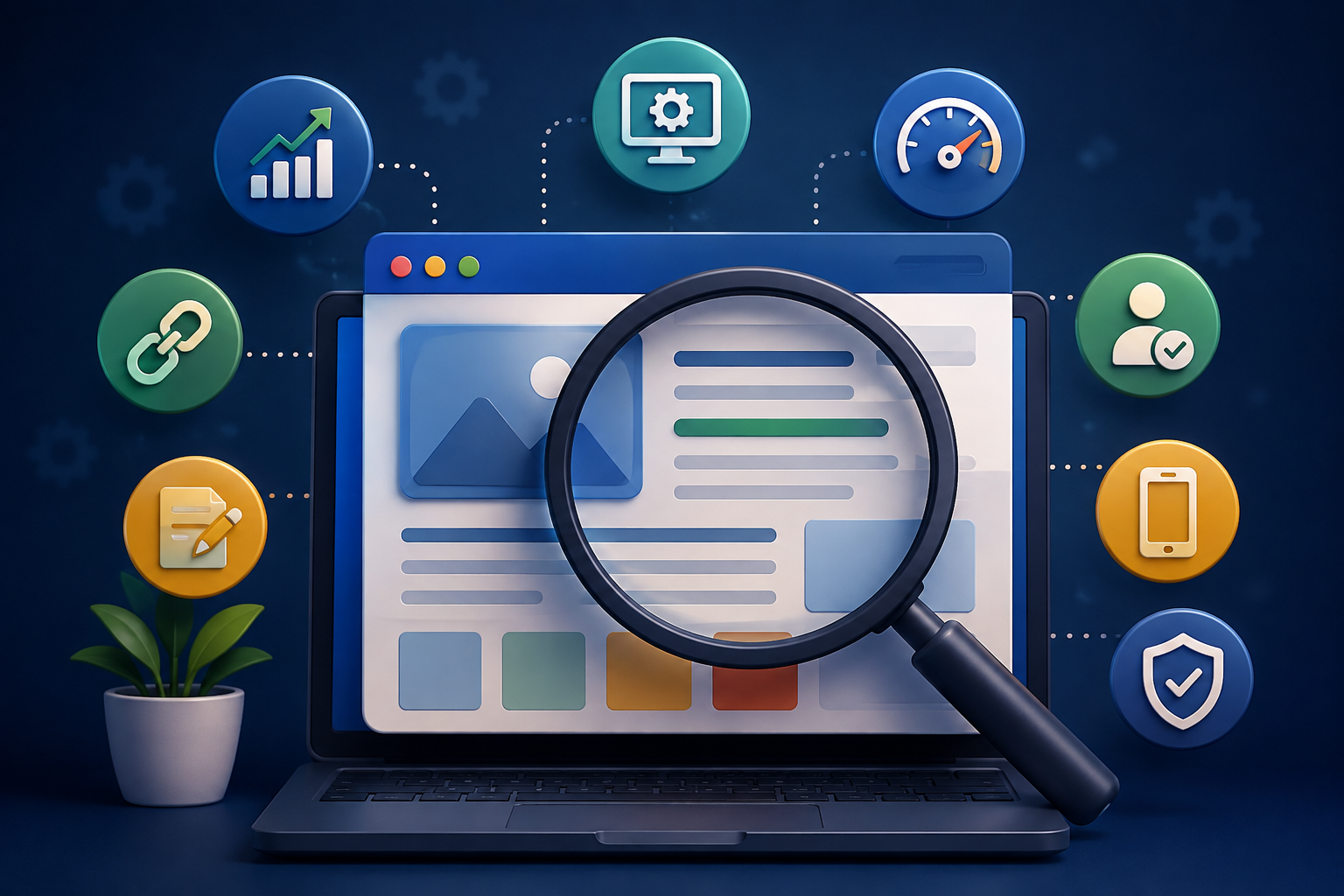
If you’ve ever wondered why some websites rank effortlessly on Google while others with better products or content stay buried on page three, the answer usually comes down to one thing: on-page SEO. It’s not glamorous, and it doesn’t get the same buzz as paid ads or viral social campaigns, but it’s the foundation everything else sits on.
Whether you run a small business website, write blog content for a living, or are just starting to explore digital marketing course in Jaipur options, understanding the benefits of on-page SEO will change how you think about content and website structure. It’s the difference between a site that search engines can actually understand and one that gets ignored no matter how good the writing is.
In this post, we’ll break down what on-page SEO actually involves, the specific elements you need to get right, and — most importantly — the eight real benefits that make it worth your time in 2026.
What Is On-Page SEO?
On-page SEO refers to everything you optimize directly on your website to help it rank better in search results. This includes your content, title tags, headers, images, internal links, and overall page structure. It’s different from off-page SEO, which involves external factors like backlinks and social signals.
Think of on-page SEO as the groundwork. You can build backlinks and run campaigns all day, but if your actual pages are poorly structured or don’t answer the searcher’s question clearly, none of that effort converts into rankings or traffic.
Key On-Page SEO Elements You Need to Know
Before we get into the benefits, it helps to know what actually falls under on-page SEO. These are the pieces you’re optimizing.
Title Tags and Meta Descriptions
These are the first things a user sees on the search results page. A clear, keyword-relevant title tag paired with a compelling meta description directly influences whether someone clicks your result or scrolls past it.
Header Tags (H1, H2, H3)
Proper header structure helps both readers and search engines understand how your content is organized. A single H1, followed by logical H2s and H3s, makes long content scannable instead of overwhelming.
Internal Linking
Linking between your own pages — like connecting a blog post to a relevant service or course page — helps distribute authority across your site and keeps visitors exploring longer instead of bouncing.
Image Optimization
Compressed images with descriptive alt text improve page speed and give search engines more context about your content, while also making your site accessible to visually impaired users.
URL Structure
Short, readable URLs that include relevant keywords are easier for both users and crawlers to understand than long strings of numbers and parameters.
Content Quality and Keyword Placement
Ultimately, none of the technical elements matter if the content itself doesn’t genuinely answer what the searcher is looking for. Keywords should appear naturally, not stuffed in for the algorithm’s sake.
If you’re curious how these technical pieces connect to actual site-building, a web development course in Jaipur covers the coding side of things like URL structure, page speed, and mobile responsiveness — all of which tie directly back into on-page SEO performance.
8 Benefits of On-Page SEO You Can’t Ignore
Now let’s get into why all of this actually matters for your website, your business, or your career.
1. Higher Search Engine Rankings
This is the most obvious one. Search engines reward pages that are well-structured, relevant, and genuinely useful to searchers. Get your on-page elements right, and you give your content a real shot at ranking above competitors who skip this step.
2. Better User Experience
On-page SEO isn’t just for algorithms — it’s for people. Clear headers, logical content flow, and fast-loading pages make visitors more likely to stay, read, and take action instead of leaving within seconds.
3. Increased Organic Traffic
When your pages rank higher and match search intent more closely, more people find you without you having to pay for every single click. Over time, this compounds into a steady stream of visitors.
4. Stronger Click-Through Rates
A well-written title tag and meta description don’t just help rankings — they directly affect whether someone chooses your result over a competitor’s, even when you’re positioned similarly on the results page.
5. Improved Site Structure and Crawlability
Good internal linking and clean URL hierarchies make it easier for search engine bots to crawl and index your entire site, not just individual pages. This matters especially as your website grows.
6. Higher Conversion Rates
Traffic that arrives through relevant, well-optimized content tends to convert better than traffic driven by vague or mismatched targeting, because visitors are already looking for exactly what you’re offering.
7. Long-Term, Cost-Effective Results
Unlike paid ads that stop generating traffic the moment your budget runs out, well-optimized on-page content keeps working for months or years, making it one of the more sustainable marketing investments a business can make.
8. A Competitive Edge in Your Niche
Many businesses still treat on-page SEO as an afterthought. Doing it properly — consistently — puts you ahead of competitors who are relying purely on paid visibility or guesswork.
On-Page vs Off-Page SEO: Why Both Matter
It’s worth being clear that on-page SEO isn’t the whole picture — it works alongside off-page SEO, which includes backlinks, brand mentions, and social proof from other websites.
Here’s a simple way to think about it: on-page SEO tells search engines what your page is about and proves it’s worth ranking. Off-page SEO tells search engines that other credible sources trust and reference your content. You genuinely need both, but on-page SEO is where you have the most direct control, which is exactly why it’s the smarter starting point for beginners.
Common On-Page SEO Mistakes Beginners Make
Even well-intentioned website owners and marketers slip up here. A few of the most frequent mistakes:
- Keyword stuffing — repeating the same phrase unnaturally instead of writing for readers first
- Duplicate title tags across multiple pages, confusing search engines about which page to rank
- Ignoring mobile optimization, even though most searches now happen on phones
- Skipping alt text on images, missing out on both accessibility and SEO value
- Weak internal linking, leaving valuable pages isolated with no pathway for visitors or crawlers to find them
Avoiding these isn’t complicated once you understand the fundamentals — it just takes consistency.
Where to Learn On-Page SEO in Jaipur
If this all sounds useful but a little overwhelming to implement on your own, that’s completely normal. On-page SEO is a skill that’s genuinely easier to learn with structured guidance, real project practice, and feedback from people already working in the field.
At Tech Career, our digital marketing institute in Jaipur covers on-page SEO as a core module alongside keyword research, content strategy, off-page SEO, and analytics — with hands-on practice, not just theory. It’s built for beginners as well as professionals looking to formalize skills they’ve picked up informally.
Entry-level digital marketing salaries typically start in the low-to-mid five figures per month in India and scale with experience, specialization, and the size of the company you join.
Conclusion
On-page SEO isn’t a one-time task you check off and forget — it’s an ongoing discipline that shapes how visible, usable, and trustworthy your website is to both search engines and real people. From better rankings and traffic to stronger conversions and a lasting competitive edge, the benefits of on-page SEO touch nearly every part of your digital presence.
If you’re serious about building this skill properly — whether for your own business or as a career path — a structured digital marketing course in Jaipur is one of the fastest ways to move from “I’ve heard of SEO” to “I can actually do this for a living.”
FAQs
1. What is the main goal of on-page SEO?
The main goal is to make individual web pages easier for search engines to understand and rank, while also making them more useful and readable for the people visiting them.
2. How long does it take to see results from on-page SEO?
It varies by website age, competition, and how much content needs optimizing, but most sites start noticing gradual ranking improvements within a few weeks to a couple of months of consistent changes.
3. Is on-page SEO more important than off-page SEO?
Neither is more important on its own — they work together. However, on-page SEO is usually the better starting point since you have full control over it, unlike off-page factors like backlinks.
4. Can I do on-page SEO without technical or coding skills?
Yes, for the most part. Title tags, headers, content structure, and image alt text can all be managed through most website platforms without needing to write code, though basic HTML knowledge helps.
5. What tools are commonly used for on-page SEO?
Popular options include Yoast SEO and Rank Math for WordPress, Google Search Console for performance tracking, and tools like Screaming Frog for auditing larger websites.
6. Do I need a digital marketing course to learn on-page SEO properly?
Not strictly, but structured learning helps you avoid common mistakes, understand why techniques work rather than just copying steps, and get feedback on real projects — which self-study often lacks.
Get Full Syllabus on WhatsApp or Book a Free Counselling Call with Tech Career today.